
Mind Mirage
Research · Learning · Consultancy
Mind Mirage is a space for engaging with Indian Knowledge Systems, rooted in the Bhāratīya Jñāna Paramparā, offering scriptural study, Yoga, and guided learning, where knowledge unfolds through preparation and lived inquiry.
About Us
About Us
Mind Mirage offers the Bhāratīya Jñāna Paramparā as Indian Knowledge Systems through learning programs, research, and publications that make classical wisdom accessible without reducing its depth.
Courses are designed to cultivate understanding gradually, emphasizing preparation, reflection, and lived engagement rather than rapid consumption. Alongside learning programs, Mind Mirage undertakes research and publications to encourage thoughtful awareness of Indian Knowledge Systems through educational material, interpretive writing, and scriptural work.
At Mind Mirage, learning is guided by the understanding that classical texts cannot simply be read — they must be received. Knowledge is inseparable from the readiness of the seeker; without preparation of mind, even profound teachings remain intellectual.
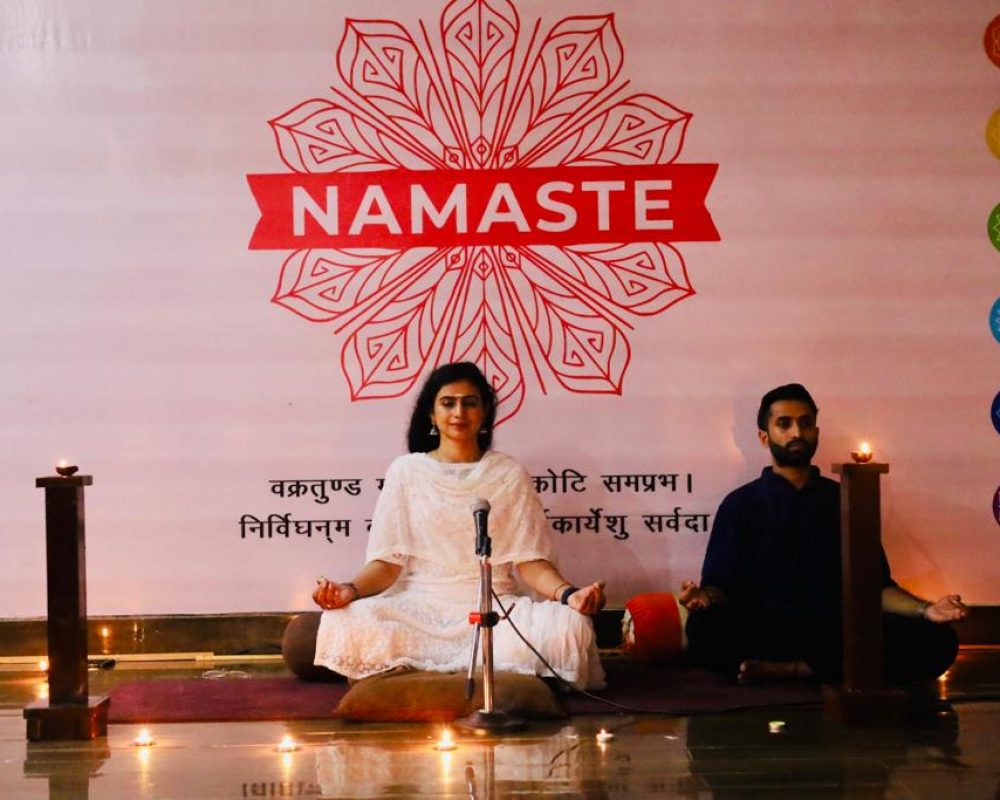
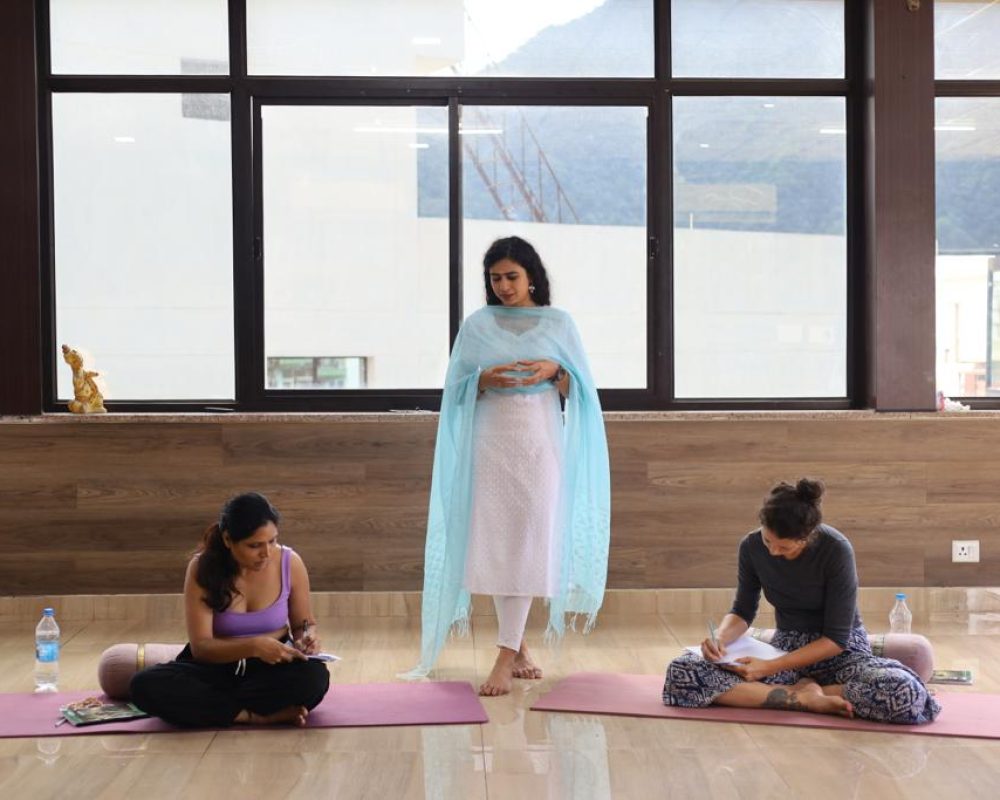
For this reason, study begins with preparation. Through yoga, reflection, and guided discourse, learning unfolds gradually in alignment with the guru–śiṣya paramparā, rooted in respect, humility, and lived engagement.
Established as a non-profit, Mind Mirage exists to serve learning in the spirit of the Indian ashramic tradition — affordable, sincere, and rooted — while creating dignified teaching opportunities, especially for women.
Meet Bhagyashree Ji
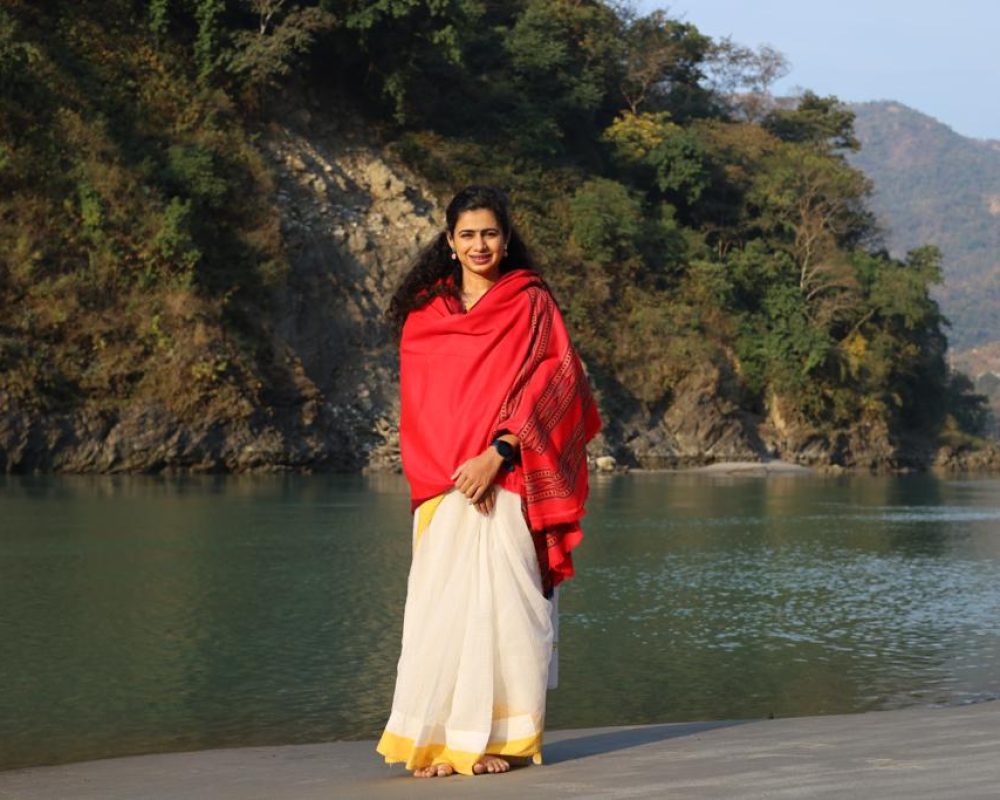
Rooted in Sanātana Dharma and guided by lived practice from early childhood, her journey in sādhanā began at the age of three and has continued as a steady undercurrent throughout her life. Coming from a lineage that has contributed to spiritual literature and upheld the tenets of Sanātana Dharma across generations, she was raised within a living tradition of study, discipline, and service. This inheritance shaped not a sense of authority, but a responsibility — to preserve, deepen, and share this knowledge with sincerity. Alongside this spiritual grounding, she extended her service into the wider world, engaging deeply in professional roles across diverse corporate environments. She is an active member of the Network of Hinduism in Dialogue( Oxford Centre for Hindu Studies, UK), reflecting her ongoing engagement with dialogue, reflection, and scholarship within contemporary contexts. While her responsibilities evolved, her spiritual discipline and study of classical Indian wisdom remained constant. She has now stepped away from professional engagement to fully devote herself to sādhanā, study, and guidance — offering her experience and insight as Founder Director of Mind Mirage — Consultants in Indian Knowledge Systems.
Meet Bhagyashree Ji
Who This Space Is For
◦ Drawn to Indian Knowledge Systems, but seek guidance
◦ Wish to approach classical texts with respect and preparedness
◦ Prefer depth over speed, and reflection over consumption
◦ Are open to learning as a lived process
How Learning Unfolds at Mind Mirage
01
Preparation of mind and attention
02
Guided engagement through yoga and reflection
03
Gradual introduction to texts
04
Integration through inquiry and lived engagement
On YouTube
Reflections, teachings, and conversations shared on our YouTube channel.
Visit our YouTube Channel→
Founder’s Writings
Selected essays by our founder, originally published on platforms devoted to travel, reflection, and inner exploration.

A Spiritual sojourn in Tawang, Arunachal Pradesh
We live in the age of skyscrapers, airplanes, intelligent machines, and smart gadgets that were designed to make us happy. They did make life easier yet I felt devoid of long-lasting happiness and a sense of fulfillment. And so, I set out on a journey to seek my way to happiness that was not short-lived and certainly, not based on materialistic possessions.
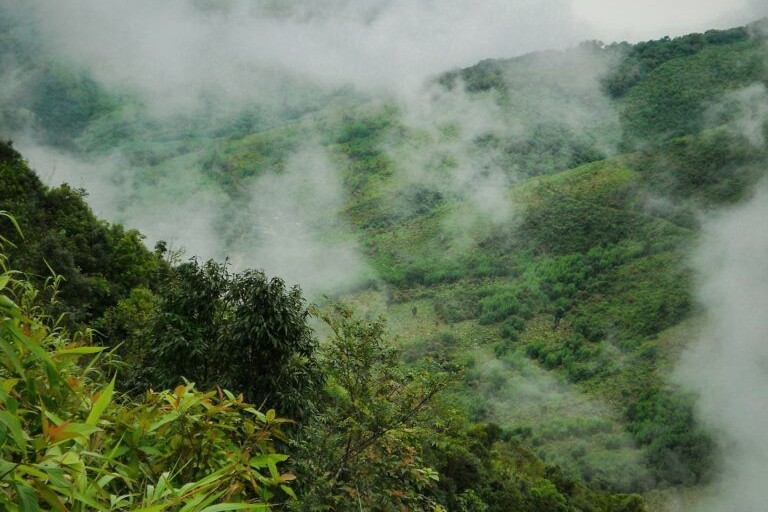
Wellness wisdom from the hills of Meghalaya…
I like to take up a wellness journey at least once in a year to a new destination, and explore the extant wellness practices. On my last wellness getaway, I decided to travel to Meghalaya, a state in the northeast pocket of the country, with a whopping eighty-five percent of tribal population.

Watch beautiful Orchids adorn the Himalayan Foothills at Sessa Orchid Sanctuary!
As tourists, many of us like seeing places of natural beauty. I derive great joy from witnessing a natural event like the mass blooming of flowers. Colorful buds spread across acres of land are a treat for the eyes. From the Keukenhof Tulip festival in Amsterdam to the valley of flowers in Uttarakhand, I always look forward to visiting them.
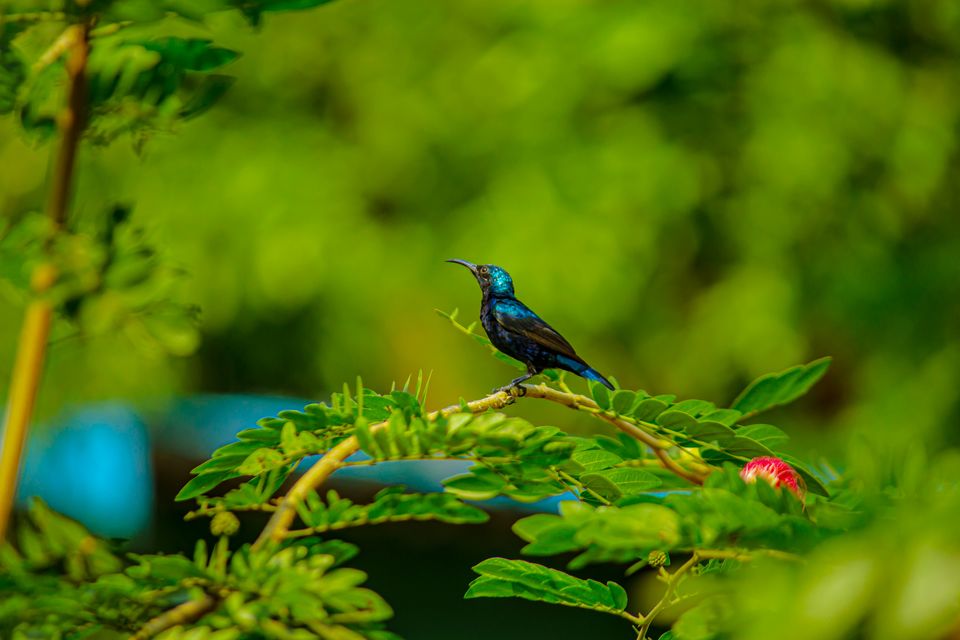
Shinrin Yoku- A Forest bathing experience in India’s Tropical Forests.
Travel restrictions during the pandemic encouraged me to explore destinations in proximity. I planned on visiting my ancestral home in the Konkan region of coastal Maharashtra, a journey in the denser Western Ghats. It was a long full-day drive from Pune to Ratnagiri.

“I canoed across the Floating lake of India and met the Eld’s deer. Guess Where?”
It had been four hours since we took refuge in patches of tall grass. Discreetly waiting for its appearance. The surroundings were quiet I could hear every cricket chirping on the calm winter evening. The grass was tall enough to conceal us. I took all precautions to exert less pressure on the ground as the land beneath me was a layer of thick biomass floating on water.
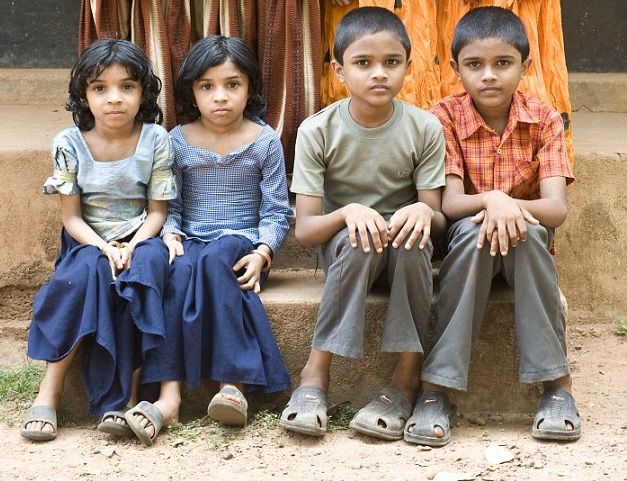
A Double Discovery!
The heavy chirping of birds soon woke me up. It had rained throughout the night and I could see various puddles brimming under the coconut tree from my window. I had arrived late at night due to a delay in my flight schedule and the local host Rachana and her family were kind to harbor me in her house on short notice.
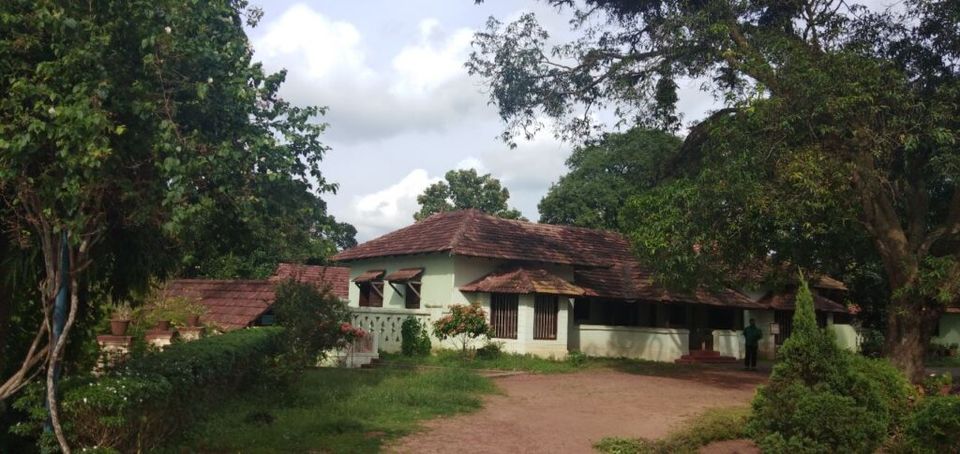
Nesting in a ‘Nalukettu’ style Eco Home
Out of all my routine escapades, I relish visiting Kerala the most. You may think, it’s the view of lush greenery cherished from the window, as the flight starts descending towards the state, or, it is the melodious chirps of birds, or perhaps the temptation of a therapeutic massage that draws me to Kerala?
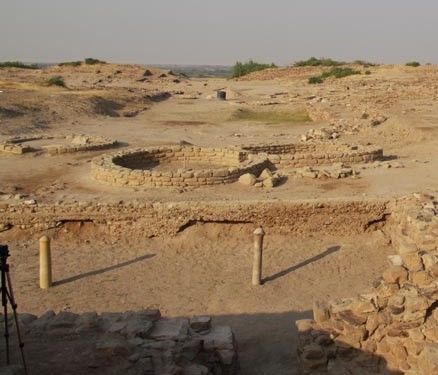
Travel back in time with Indus Valley Civilization sites in India
All early civilizations in history took birth alongside major rivers across the world. The Mesopotamian civilization alongside the Tigris and the Euphrates, The Egyptian civilization alongside the Nile, The Chinese Civilization alongside the Yangtze and India, blessed with youthful rivers originating from the Himalayas saw the emergence of one of the most advanced societies of the time…The INDUS VALLEY CIVILIZATION, Read on Tripoto→
Frequently Asked Questions
What is Mind Mirage, and how did it come into being?
Mind Mirage emerged during the pandemic, at a time when meaningful engagement with Indian Knowledge Systems was noticeably absent from mainstream education. What began as a quiet inquiry soon took form as a response — to make the wisdom of the Bhāratīya Jñāna Paramparā accessible, relevant, and alive for contemporary learners.
The first expression of Mind Mirage was through an educational magazine developed in collaboration with schools. These publications introduced students to Indian scriptures, cultural knowledge, and reflective activities, creating an early bridge between traditional wisdom and modern education. As schools expressed a desire to deepen this engagement — including structured Sanskrit learning — the need for a formal, ethical framework became clear.
In 2021, Mind Mirage was registered as a Section 8 (non-profit) organization, devoted exclusively to Indian Knowledge Systems. It was established not as a commercial venture, but as a legally grounded platform for teaching, research, and dissemination.
Today, Mind Mirage rests on three interwoven pillars:
-Publications — including educational material, research papers, and scriptural texts, with ongoing efforts to translate classical works from Sanskrit into English and other regional languages.
-Research — continuous inquiry into Indian Knowledge Systems, with an emphasis on contextual understanding and contemporary relevance.
-Training & Learning — courses and programs designed to cultivate familiarity, depth, and lived engagement with IKS, with particular attention to accessible education for women through short courses and modular learning.
Mind Mirage exists to serve learning, not profit. Its intention is to offer education in the spirit of the Indian ashramic tradition — affordable, sincere, and rooted — while also creating dignified teaching opportunities, especially for women engaged in this work.
What guides the way programs at Mind Mirage are designed and offered?
At Mind Mirage, programs are guided by the understanding that classical texts cannot simply be read — they must be received.
Within the Bhāratīya Jñāna Paramparā, knowledge is not separate from the state of the seeker. The mind requires a certain readiness, clarity, and steadiness to truly engage with these teachings. Without this preparation, even profound texts remain intellectual rather than transformative.
For this reason, our approach begins not with interpretation, but with preparation. Programs are designed to gently cultivate the inner conditions required to approach classical texts — through yoga, reflection, and guided discourse. This allows the teachings to be appreciated in their traditional spirit, rather than consumed as information.
The structure of our learning follows the ethos of the guru–śiṣya paramparā, where study unfolds gradually, with respect, humility, and lived engagement. Texts are introduced only when the seeker is ready to meet them — not hurried, not forced, and not detached from practice.
In this way, learning at Mind Mirage becomes a process of alignment — preparing the mind, opening understanding, and allowing wisdom to take root naturally.
Are the teachings religious, spiritual, or philosophical in nature?
The teachings at Mind Mirage draw from all three — philosophical, spiritual, and religious — without being confined by any one of them.
They are rooted in classical Indian wisdom, where philosophy, spirituality, and religious expression were never seen as separate paths, but as interconnected ways of understanding life. When the teachings touch the religious, they do so in an inclusive sense — open, non-exclusive, and respectful of all traditions.
No belief system is imposed, and no identity is required. The focus remains on inquiry, inner clarity, and lived understanding rather than adherence or doctrine.
In this way, the teachings remain accessible to seekers from diverse backgrounds, inviting reflection rather than belief, and experience rather than labels.
Do I need prior knowledge of yoga or Indian philosophy to join a program?
Prior knowledge is not required for all programs.
Some offerings are designed as gentle entry points and are open to beginners, with no previous background in yoga or Indian philosophy needed. These programs begin slowly, creating familiarity and comfort with the teachings.
Other programs may invite a certain level of prior study or experience, and this will always be clearly mentioned in advance. In every case, guidance is offered with care, ensuring that participants are supported at their own pace.
Wherever you begin, you are met where you are — with clarity, patience, and respect for the learning journey.
When does the Lalita Program begin, and how is it conducted?
The Lalita Program begins in January.
The journey is offered in a blended format, with sessions conducted online, allowing participation from anywhere in the world, along with select in-person gatherings held at specific moments of the program. These in-person sessions are designed as optional spaces for deeper connection and shared presence.
All details regarding the format and schedule are shared clearly in advance, allowing participants to engage in a way that feels supportive and sustainable.
Is the Lalita Program suitable for someone who is new to inner work?
Yes. The Lalita Program is suitable for anyone who feels called to engage in inner work, whether they are new to this path or have prior experience.
The program is designed to offer a supportive and grounded environment, where participants are guided gently and without pressure. Alongside personal reflection, Lalita also cultivates a sense of sincere peer connection — creating space for genuine, respectful relationships to form naturally.
You are not expected to arrive with answers or experience, only with openness and a willingness to engage honestly.
Is there interaction with teachers or other participants?
Yes. The Lalita Program encourages meaningful interaction with both the teachers and fellow participants.
Sessions are designed to allow space for dialogue, shared reflection, and questions, creating a learning environment that feels engaged yet respectful. Alongside guided teachings, participants have opportunities to connect with one another in ways that support understanding, community, and shared growth.
All interaction is held with care, ensuring that personal pace, comfort, and boundaries are respected.
How are emotional safety and personal pace respected within the programs?
Emotional safety and personal pace are central to the way the Lalita Program is held.
Each cohort is intentionally kept small, with a maximum of twelve participants, allowing space for individual attention, trust, and genuine connection. For sessions that invite deeper reflection or personal expression, the group size may be even smaller and sometimes personalized, ensuring that each participant feels supported and unhurried.
There is no pressure to share, perform, or keep pace with others. Participants are encouraged to engage at a rhythm that feels authentic to them, with respect for personal boundaries and inner readiness always maintained.
In this way, the program creates a contained and caring environment where depth can unfold safely and naturally.
Are the programs live, recorded, or a combination of both?
The programs at Mind Mirage are offered as a combination of live and recorded sessions.
Live sessions allow for guided teaching, interaction, and shared presence, while recorded sessions provide the flexibility to revisit teachings and integrate them at your own pace. This blended approach supports both structure and spaciousness within the learning journey.
Details about the format of each program are shared clearly in advance, allowing participants to engage in a way that feels balanced and sustainable.
How do recorded sessions work if I’m unable to attend live programs?
Programs are offered with the option to include recorded access alongside live sessions.
Participants may choose the format that best suits their needs — attending live sessions only, or enrolling in a version that includes recordings for later viewing. Recorded sessions allow you to revisit the teachings and engage with the material at your own pace if you are unable to attend live.
Where recordings are provided, this is clearly indicated during enrollment. An additional fee may apply to support secure storage and access to the recorded material, and all such details are shared transparently in advance.
This flexibility allows each participant to engage with the program in a way that feels practical, supportive, and sustainable.
What is the cancellation and refund policy?
Mind Mirage does not offer cancellations or refunds once a program has begun.
To support clarity and informed participation, programs include introductory sessions at the beginning of the journey. These initial sessions are offered to help participants experience the teaching style, rhythm, and approach, and to reflect on whether the program feels aligned with their needs.
This structure allows participants to make a considered choice early on, before committing fully to the course. Details regarding this process are shared clearly in advance, ensuring transparency and mutual respect.
Can I join a program from anywhere in the world?
Yes. The programs at Mind Mirage are designed to be accessible from anywhere in the world.
With online participation, you can join sessions from your own space, without geographical limitations. All necessary details for joining are shared clearly in advance, making the process simple and supportive.